
Kurso
WHAT IS APOSTOLIC ORDER?
1,894 salita, mga 9 min na pagbasa
1: L E S S O N
Overview
This lesson explores the biblical concept of order, with special emphasis on apostolic order. Key terms are defined and clarified through Scripture and biblical examples. Analogies are used to convey the importance of order, particularly apostolic order, in the life of the Church.
Reflection activities invite self-evaluation and encourage change where needed. The goal is that, through study, learners will develop a greater willingness to align personally with God’s divine order in every area of life, addressing any gaps that are revealed.
Objectives During this lesson, you should be able to:
1. Analyze the meaning of key terms, such as order, apostle, and apostolic order based on Scripture.
2. Identify biblical examples that prove that God is a God of order.
3. Illustrate, with the use of an analogy, the importance of God’s divine order.
4. Explain the connection between apostolic order and the biblical truth that God gifts and places each person in the Body of Christ as it pleases Him.
5. Reflect on how personal attitudes and practices show alignment or misalignment with God’s divine order.
Activity 1.1 Preparation Activity
Discovering the Meaning of Order
Instructions: Read the Bible verses and the scenarios below. Then, answer the questions in the spaces provided.
BIBLE VERSE CHEST
1 Corinthians 14:40
1. “Let all things be done decently and in order.” (1 Corinthians 14:40)
Colossians 2:5
2. “For though I am absent in the flesh, yet I am with you in the spirit, rejoicing to see your good order and the steadfastness of your faith in Christ.” (Colossians 2:5)
Scenario 1: A Music Band
A band has many instruments. Each plays a different part, but all must follow the same rhythm and leader. When each person plays his/her role, the result is harmony.
Questions:
In what ways do you see order in a music band?
What happens if one musician ignores the order?
How does this example reflect God’s design for His Church?
Scenario 2: A Dance Team
A dance team practices specific steps and positions. Each dancer must move in sequence and stay in formation.
Questions:
In what ways do you see order in a dance team?
What happens if one dancer does not follow the choreography?
How does this example reflect God’s design for His Church?
THE BIBLICAL PERSPECTIVE OF “ORDER”
1 Corinthians 14:40
Let all things be done decently and in order.
The above Scripture focuses on an aspect of Christianity that is often discussed yet not fully understood. Have you ever heard the phrase, “God is a God of order”? This is definitely a cliché in the Church, but it is absolutely true. God is indeed a God of order.
God has always carried out His plan through divine order. In creation, He arranged all things step by step (Genesis 1). In Israel, He established order in both the camp and in worship (Numbers 2). There are many more examples throughout the Scriptures that reveal Him as a God of order. The highlighted Scripture reflects God’s heart for order, expressed through the apostle Paul’s instruction to the Church at Corinth: “Let all things be done decently and in order” (1 Corinthians 14:40). Yet this commandment is not limited to the Corinthians alone; God has ordained order for the entire Body of Christ. This divine standard of order has never changed.
As we continue to look into this “order,” it behooves us to come to the same understanding of its definition.
ORDER: The arrangement of people or things in relation to one another according to a particular sequence, pattern,
1 or method.
In applying this definition, we find that God is very particular about how He gifts and positions people in the Body of Christ. Moreover, He has meticulously designed how they all must work with one another.
1 Corinthians 12:18
But now hath God set the members every one of them in the body, as it hath pleased him.
God sets the individuals in the Body of Christ according to His preference. The word “set” speaks to the establishment of order and position. Believe it or not, the Body of Christ has a structure established by God to govern it. This structure should be present in every born-again, believing Church in the world until the Lord returns. However, presently, this is not the case.
“APOSTOLIC” ORDER
So, what makes this order apostolic? It is important to make it very clear that I am by no means referring to the apostolic denomination and its beliefs. Rather, this order is termed “Apostolic Order” simply because the apostle’s gift is set first in the Body. The apostles were given the charge to go into all the world, preach the gospel, and establish the Church of Jesus Christ.
1 Corinthians 12:28
And God hath set some in the church, first apostles, secondarily prophets, thirdly teachers, after that miracles, then gifts of healings, helps, governments, diversities of tongues.
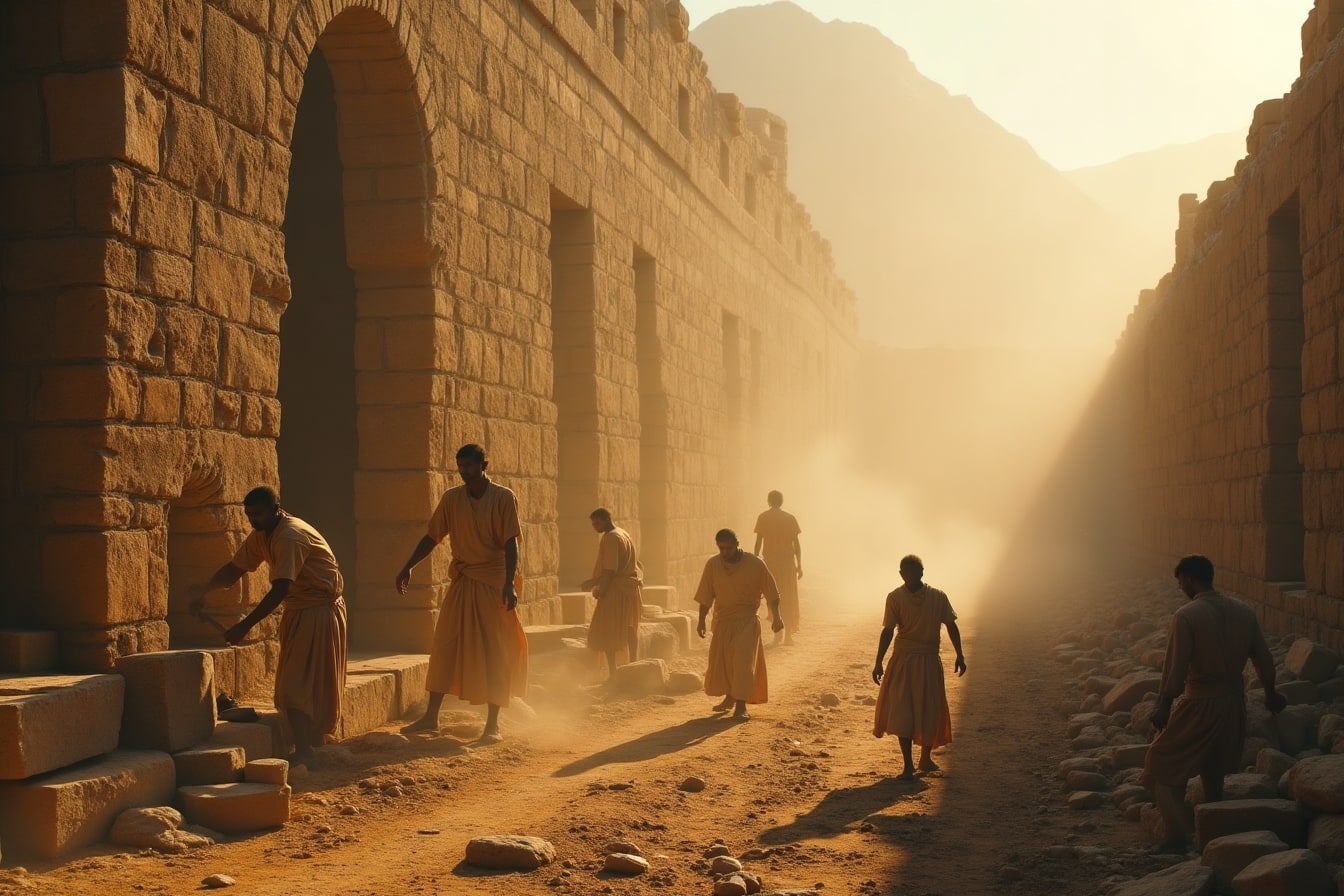
Using the analogy of a building, the apostle’s gift is set first, serving as the foundation that enables the Church, God’s building, to stand.
1 Corinthians 3:9
For we are labourers together with God: ye are God’s husbandry, ye are God’s building.
Ephesians 2:19-20
19 Now therefore ye are no more strangers and foreigners, but fellowcitizens with the saints, and of the household of God;
20 And are built upon the foundation of the apostles and prophets, Jesus Christ himself being the chief corner stone;
2 Just as a house is built through a sequence of activities, so is God’s house – the Body of Christ. Similarly, just
as none of those activities can be seen as more important than the others, all the gifts in the Body of Christ
work together to manifest the will and purpose of God on the earth.
Activity 1.2
Use the Bible Teacher App, to answer the questions below:
a) What is the definition of apostolic order?
b) Based on the definition you received, to what extent is this order evident in the Body of Christ today?
WHO IS AN APOSTLE?
An apostle is a special messenger to the churches of God, entrusted with a unique Word, specifically 3 for the Church. This Word, known as the Mystery of Christ, is the apostle’s specialty. It serves as the
connecting glue for all the other gifts in the Body of Christ. Within this Mystery lies the truth about salvation 4 and how to carry out ministry. Without the Mystery of Christ, the Church would not fully understand 5 its identity in God. Therefore, it is the apostle’s responsibility to teach this Mystery, revealing the hidden
truths of God.
Ephesians 3:1-5
1 For this cause I Paul, the prisoner of Jesus Christ for you Gentiles,
2 If ye have heard of the dispensation of the grace of God which is given me to you-ward:
3 How that by revelation he made known unto me the mystery; (as I wrote afore in few words,
4 Whereby, when ye read, ye may understand my knowledge in the mystery of Christ)
5 Which in other ages was not made known unto the sons of men, as it is now revealed unto his holy apostles and prophets by the Spirit;
Apostolic Order is simply God’s government for the Church. The apostles were charged with establishing that government. The apostles of the early Church operated as overseers of the Churches of God. Their advice was sought to settle doubts and doctrinal rifts among the people. Moreover, they, along with the prophets, provided guidance to the Body of Christ.
Activity 1.3 The Apostles & Issues in the Churches
Instructions: Search the scriptures to find examples where the apostles addressed problems, challenges, or questions in the early Churches. Fill in the table below with the Scripture reference and the issue addressed.
In closing, one might wonder where Apostolic Order is today. My answer is that it still exists. God has not
changed His methodology for governing His Church. He expects His children to submit to His perspective
of order - acknowledging the structure He has set and choosing to live in alignment with His divine purpose.
6 To learn more, continue through the courses in this series for a deeper exploration of Apostolic Order.
Lesson 1: Main Points
1. The Meaning of Key Terms Scripture defines order, apostle, and apostolic order, showing how God establishes structure, authority, and purpose in His Church (1 Cor. 14:40; Eph. 4:11-13).
2. God as a God of Order From creation to the Church, Scripture provides clear examples that reveal God’s consistent nature as a God of order (Gen. 1:1-31; Num. 2:1-34; 1 Cor. 12:18).
3. The Importance of Divine Order Analogies. such as a building, an orchestra, or a dance team help illustrate why divine order is essential for harmony, unity, and fruitfulness in the Body of Christ (1 Cor. 12:12-27).
4. Apostolic Order and God’s Placement of Gifts Apostolic order is directly connected to the truth that God Himself gifts and places each member in the Body as it pleases Him, ensuring unity and proper function (1 Cor. 12:18; Eph. 2:20-22).
5. Personal Alignment with Divine Order Believers are called to reflect on their attitudes and practices, evaluating how they align—or need to align—with God’s divine order (Rom. 12:1-2; Phil. 2:1-4).
SELF EVALUATION
The Self-Evaluation is designed to serve as a tool for you to examine how you are applying what is taught in the lesson to your own life, and/or to further probe your knowledge of the lesson. Please answer honestly and thoroughly.
In what ways did this lesson lead you to reflect on your attitudes or behaviours when order and structure were required?
Which biblical example best shows you that God is a God of order, and why?
To what extent do you believe the Body of Christ, as a whole, is in submission to God’s divine order? Explain why you hold this position.
How does understanding apostolic order help you see your place in the Body of Christ?
As you reflect, where are your attitudes and actions in line with God’s order, and where do you need to change?
EXTENDED STUDY & LEARNING RESOURCES
The task/s and support resources recommended are intended to be used to help you to study further and walk in light of the principles you have been learning.
Do your best to complete them, bearing in mind that you can study with others as a means of support and encouragement.
TASKS
Demonstration of Order in the Book of Revelation
Task 1
Read Revelation 1:1–20 carefully.
Using the guiding questions below and a diagram (flow chart or a labeled illustration) or a list of points, show how order is revealed in this chapter.
Guiding Questions
Who does the revelation begin with?
Through whom does it pass before it reaches the Churches?
How is John’s role described?
Task 2
Reflect individually or in small groups on this question: Why do you think Jesus gave specific messages to each of the seven Churches, and how does this show His expectation for order in His Body - starting with you?
Write a short journal entry (7-10 sentences) capturing your reflection.
Be prepared to share your journal entry with others and invite them to respond.
LEARNING RESOURCES
The KJV Bible, The Bible Teacher App